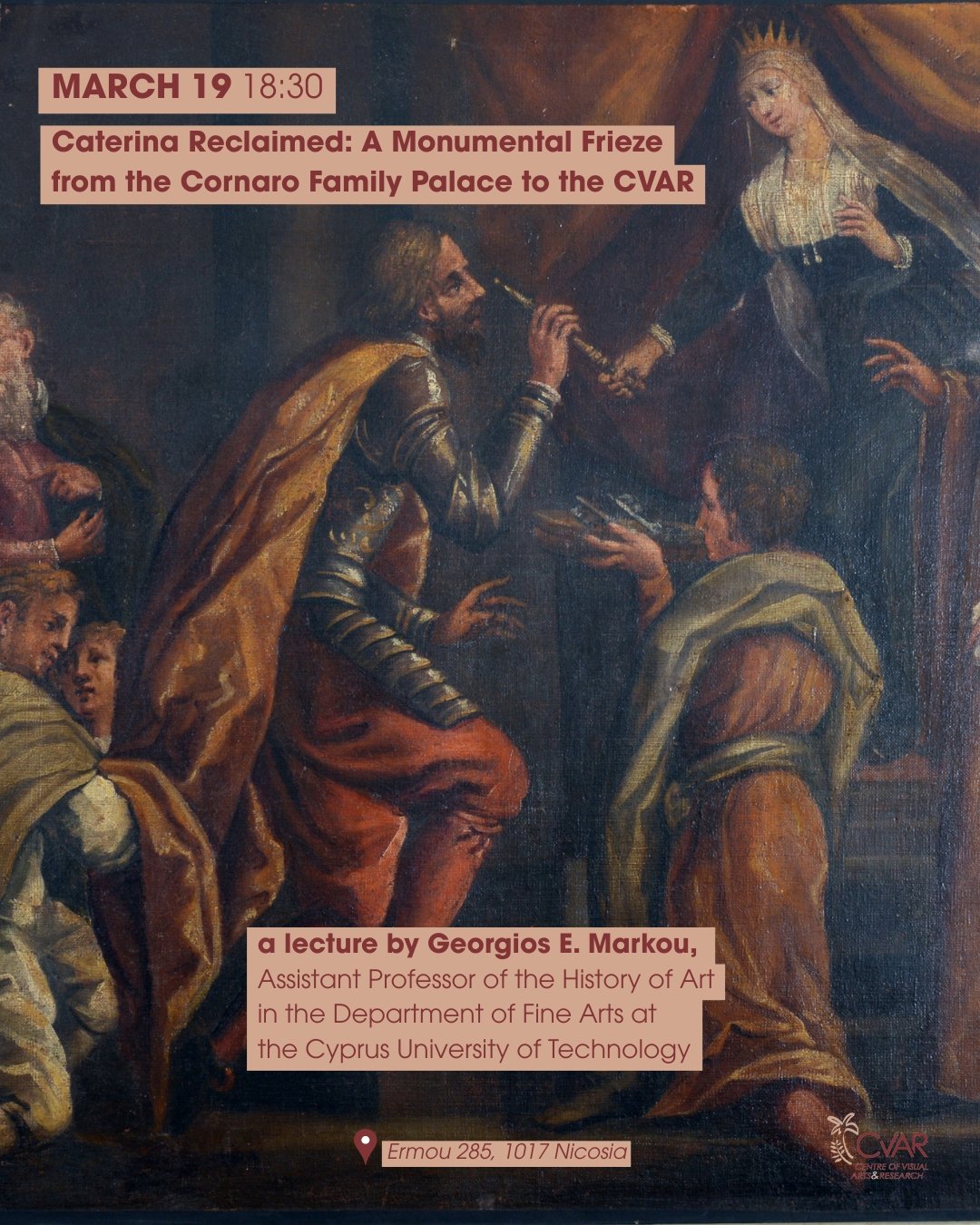
Caterina Reclaimed: A Monumental Frieze from the Cornaro Family Palace to the CVAR – Costas & Rita Severis Foundation
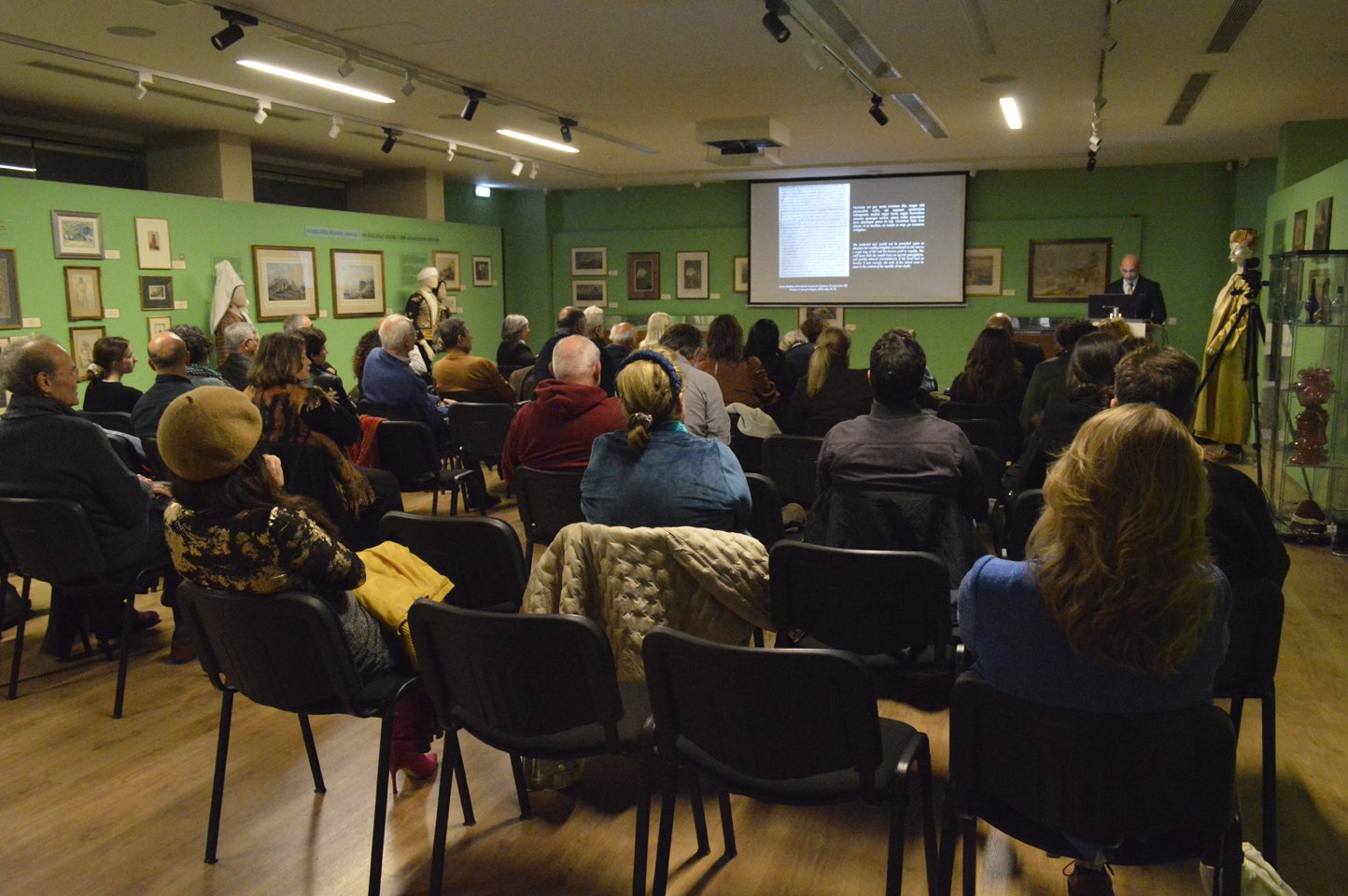
Lecture by Dr Georgios E. Markou – 19 March 2026, 18:30
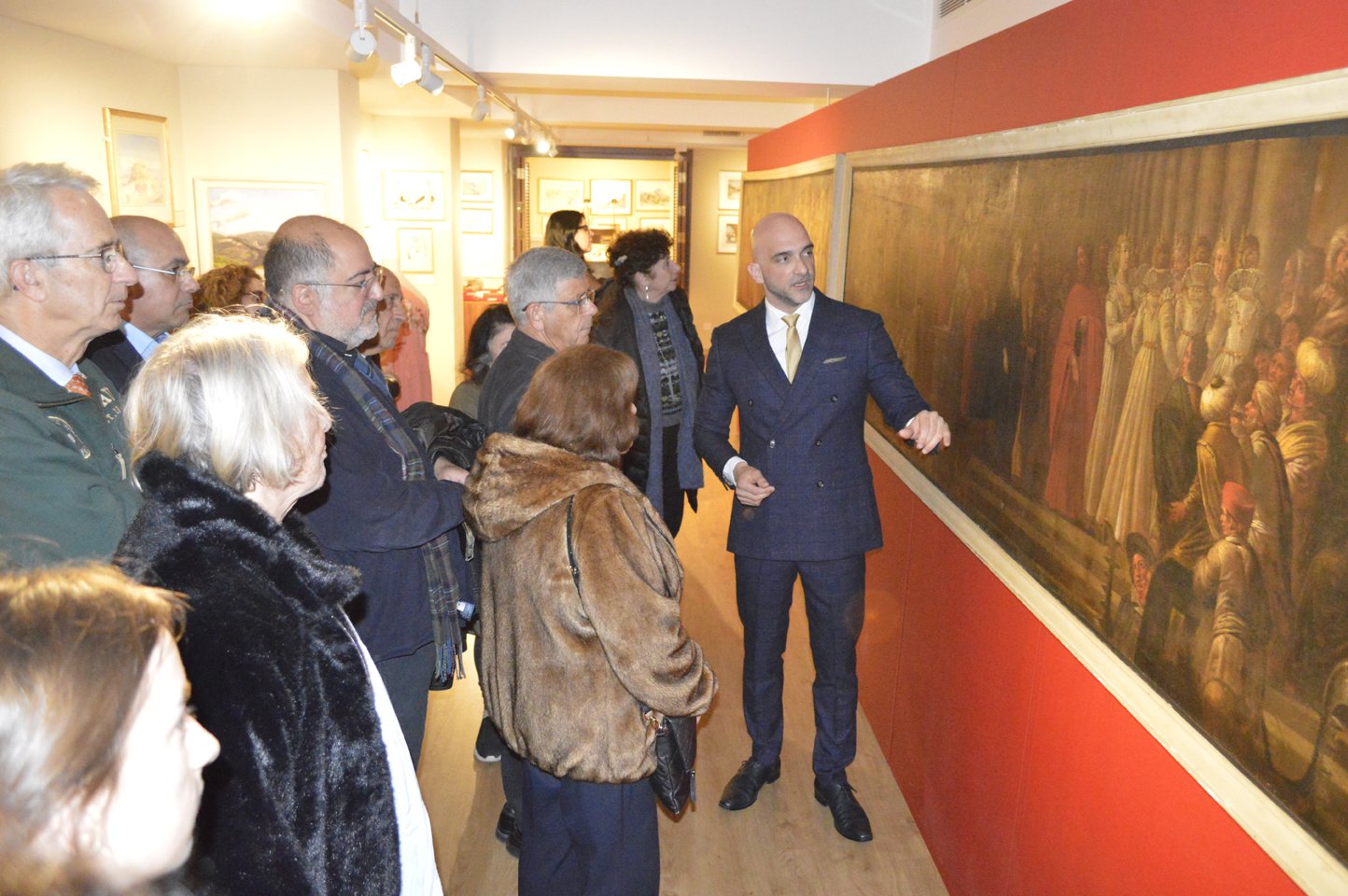
A major recent acquisition by the Severis Foundation has brought to light an extraordinary group of five paintings narrating the life of Caterina Cornaro (1454-1510), the last Queen of Cyprus. This remarkable ensemble, of considerable historical and artistic importance, offers new insight into the visual construction of her queenship and legacy. On 19 March 2026, Dr Georgios E. Markou will present these works to the public for the first time in a dedicated lecture exploring their historical context, artistic significance, and political meaning.
Born into the powerful Cornaro family of Venice, Caterina became Queen of Cyprus in 1474 during a period of intense political instability in the Eastern Mediterranean. Her reign was marked by diplomatic pressure and geopolitical tensions that culminated in her abdication in 1489, when Cyprus passed into the control of the Republic of Venice. Caterina’s life, poised between sovereignty and sacrifice, became emblematic of Venetian imperial ambition and Mediterranean dynastic politics.
The five newly acquired paintings represent an exceptionally important discovery: what appears to be the first almost coherent monumental narrative cycle illustrating key episodes from the life of the last Queen of Cyprus. Known from contemporary sources as having adorned οne of her family’s palaces in Venice, the ensemble was long considered lost or dispersed. Its re-emergence fundamentally reshapes our understanding of how Caterina’s image was constructed, displayed, and instrumentalized within a Venetian patrician context. Far from functioning as mere decoration, the cycle was conceived as a powerful program of dynastic self-representation. By monumentalizing Caterina’s queenship at a critical moment in Mediterranean geopolitics, the Cornaro family transformed royal biography into visual propaganda. Installed within their palace, the paintings articulated prestige, legitimacy, and political proximity to sovereign power, converting personal history into enduring political capital and aligning familial honour with Venice’s imperial narrative in the Eastern Mediterranean.
In his lecture, Dr Markou will introduce the paintings and analyse their narrative sequencing, iconographic program, and stylistic characteristics within the broader framework of Venetian artistic production at the turn of the sixteenth century. He will explore how the cycle constructs queenship through gesture, setting, and symbolic detail, and how it negotiates themes of power, diplomacy, abdication, and memory. Presenting initial findings on attribution, workshop practice, and patronage strategies, Dr Markou will also address the historical conditions under which the cycle was conceived and displayed. The lecture will conclude by outlining future research directions, including archival investigation, technical examination, and conservation priorities, opening new perspectives on the intersection of art, politics, and dynastic identity between Venice and Cyprus.
The event offers scholars, students, and members of the public a rare opportunity to encounter these works at an early stage of their scholarly reassessment. By revisiting the visual narrative of Caterina Cornaro, the lecture invites renewed reflection on the intersections of art, politics, gender, and historic memory.
Lecture in English on 19 March 2026 at 18:30 (CVAR - Severis Foundation)
For further information, please contact CVAR at 22300994 or info@severis.org
Biography:
Georgios E. Markou is Assistant Professor of the History of Art in the Department of Fine Arts at the Cyprus University of Technology. He received his PhD from the University of Cambridge in 2018 with a dissertation on Cypriot patrons in Renaissance Venice; this research, which repositions Eastern Mediterranean elites within the broader narrative of Venetian Renaissance art, forms the basis of his forthcoming monograph expected in 2026. He subsequently held postdoctoral appointments at Princeton University (2018-19), the British School at Rome (2019-21), and the University of Cambridge (2021-23). Dr Markou has published widely on Venetian art; his article on Bonifacio de’ Pitati’s Triumphs of Petrarch was the first study to introduce Cypriot patrons of Renaissance art into international academic discourse, and his forthcoming publications include studies on El Greco’s Greek marginalia, as well as new research on Jusepe de Ribera and Artemisia Gentileschi.
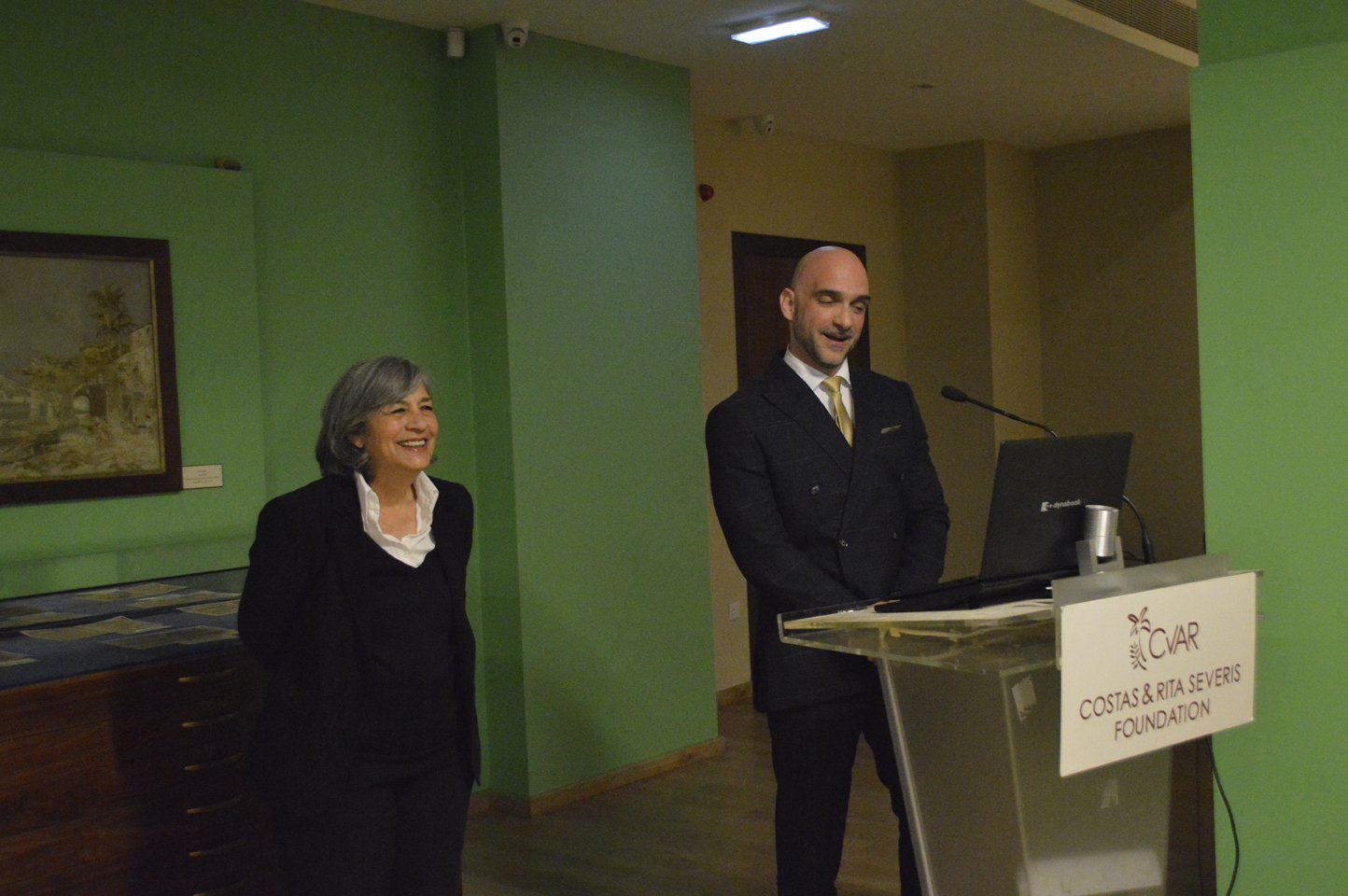
Photos and video: Stefanos Kouratzis