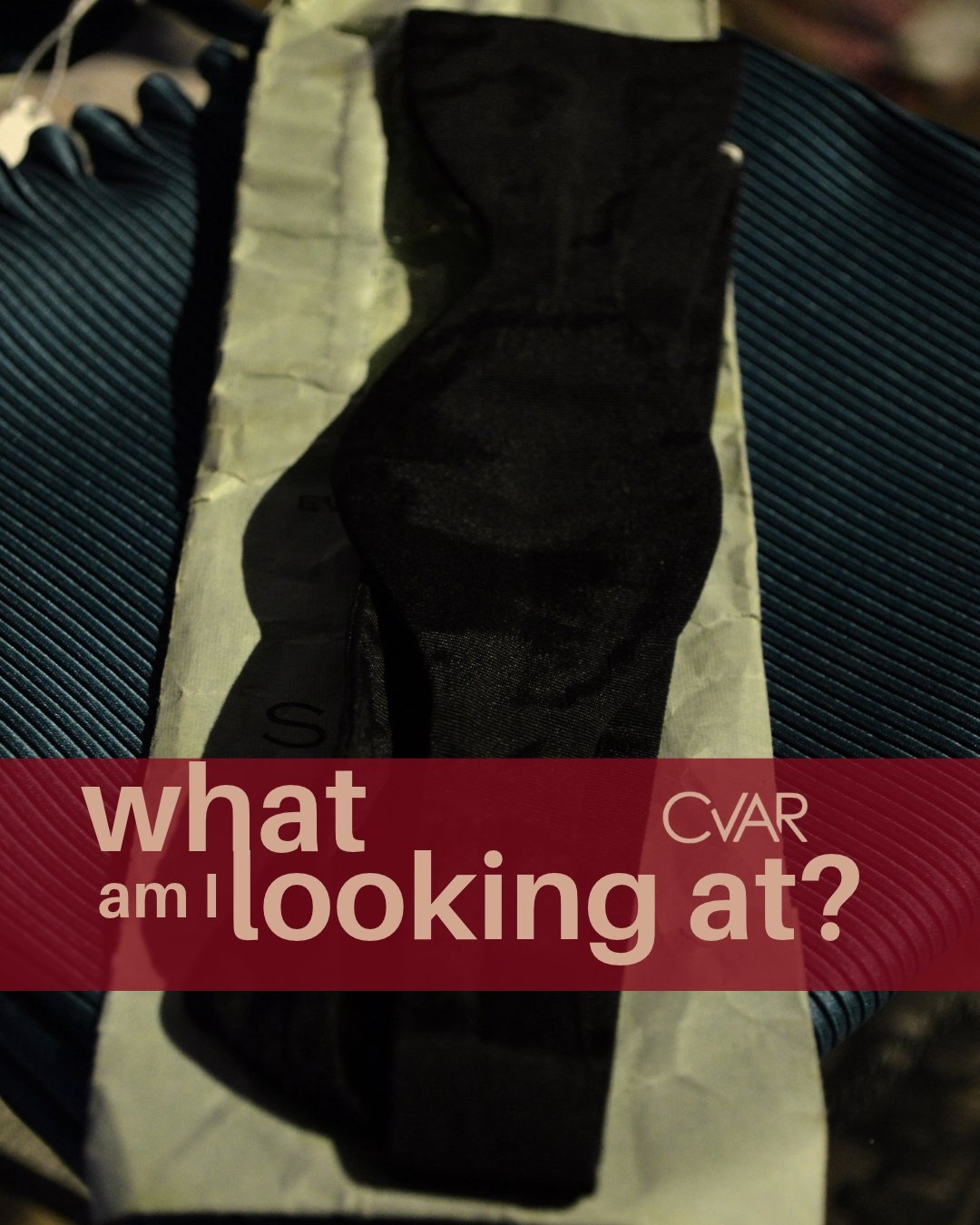
The bow tie originated among Croatian mercenaries during the Thirty Years' War of the 17th century: the Croat mercenaries used a scarf around the neck to hold together the opening of their shirts. This was soon adopted by the upper classes in France, and flourished in the 18th and 19th centuries. There are generally three types of bow ties: the pre-tied, the clip-on, and the self-tie. Pre-tied bow ties are ties in which the distinctive bow is sewn onto a band that goes around the neck and clips to secure. Some "clip-ons" dispense with the band altogether, instead clipping straight to the collar. The traditional bow tie, consisting of a strip of cloth that the wearer has to tie by hand, is also known as a "self-tie", "tie-it-yourself", or "freestyle" bow tie. Bow ties may be made of any fabric material, but most are made from silk, polyester, cotton, or a mixture of fabrics. Some fabrics (e.g., wool or velvet) are much less common for bow ties than for ordinary four-in-hand neckties.
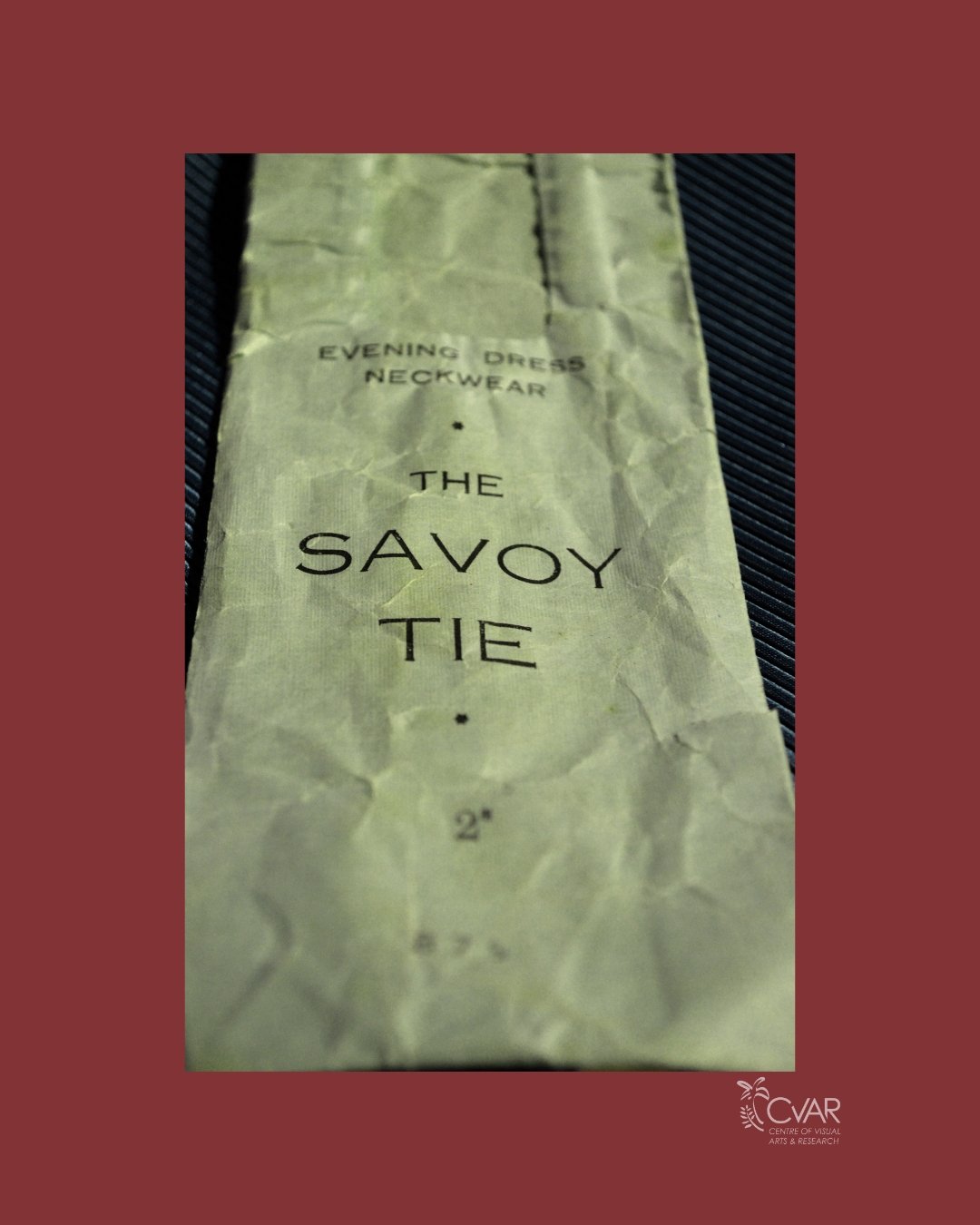
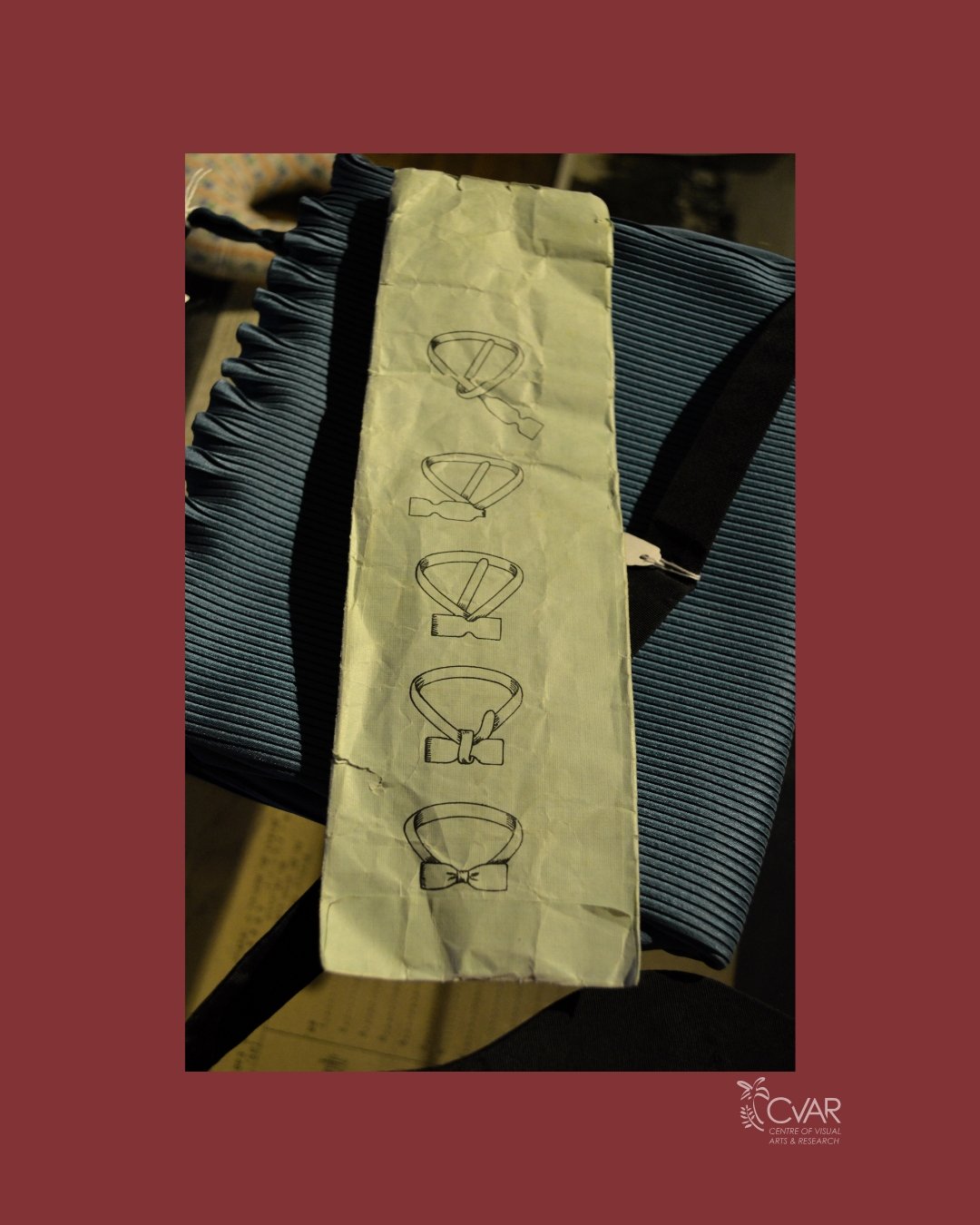
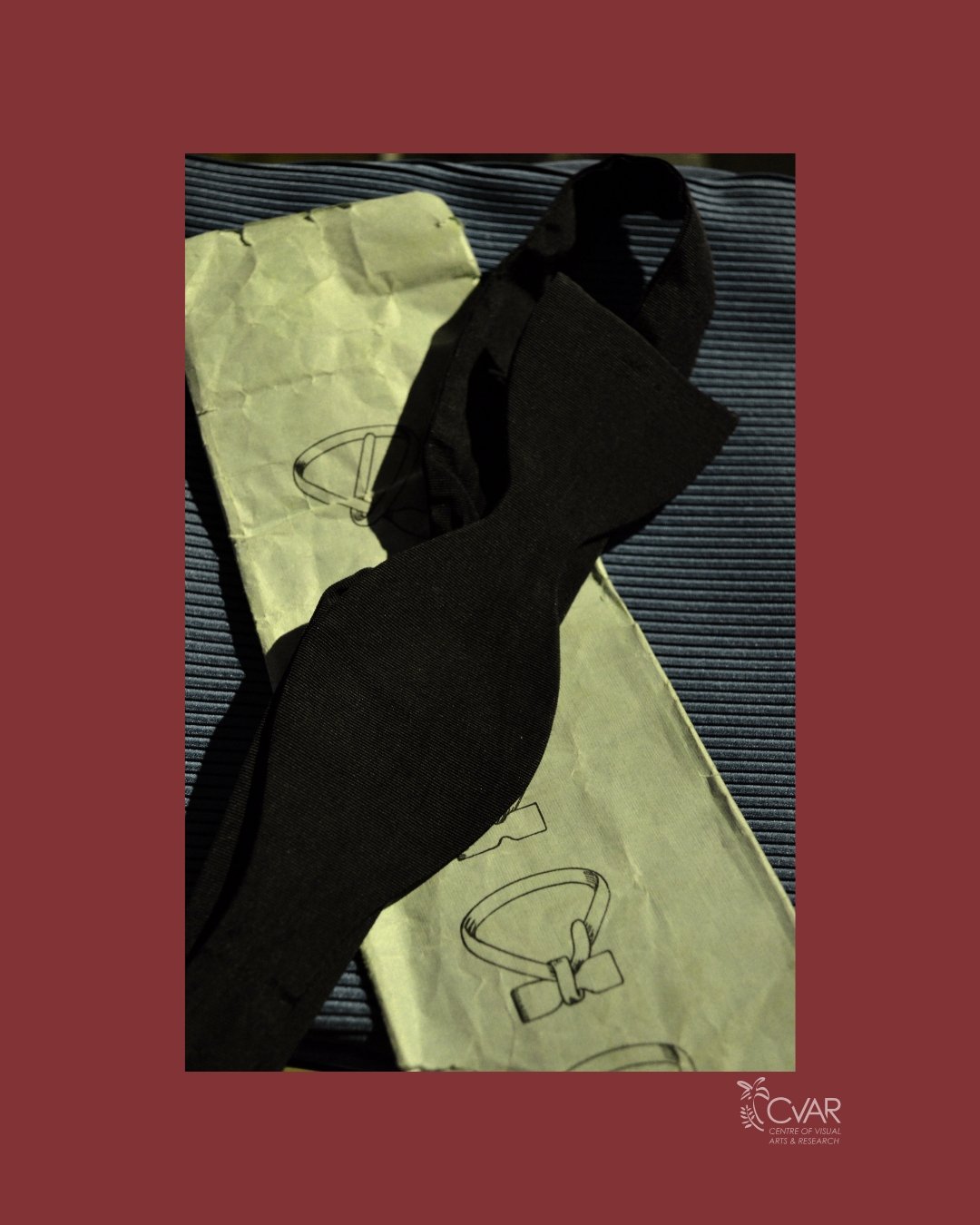
cst_01047 > Bow tie, Synthetic, 5x78 cm, 20th century
This item is not currently exhibited, but you can see many more related exhibits on the four floors of the CVAR.


